
How a Solar Well Pump Works
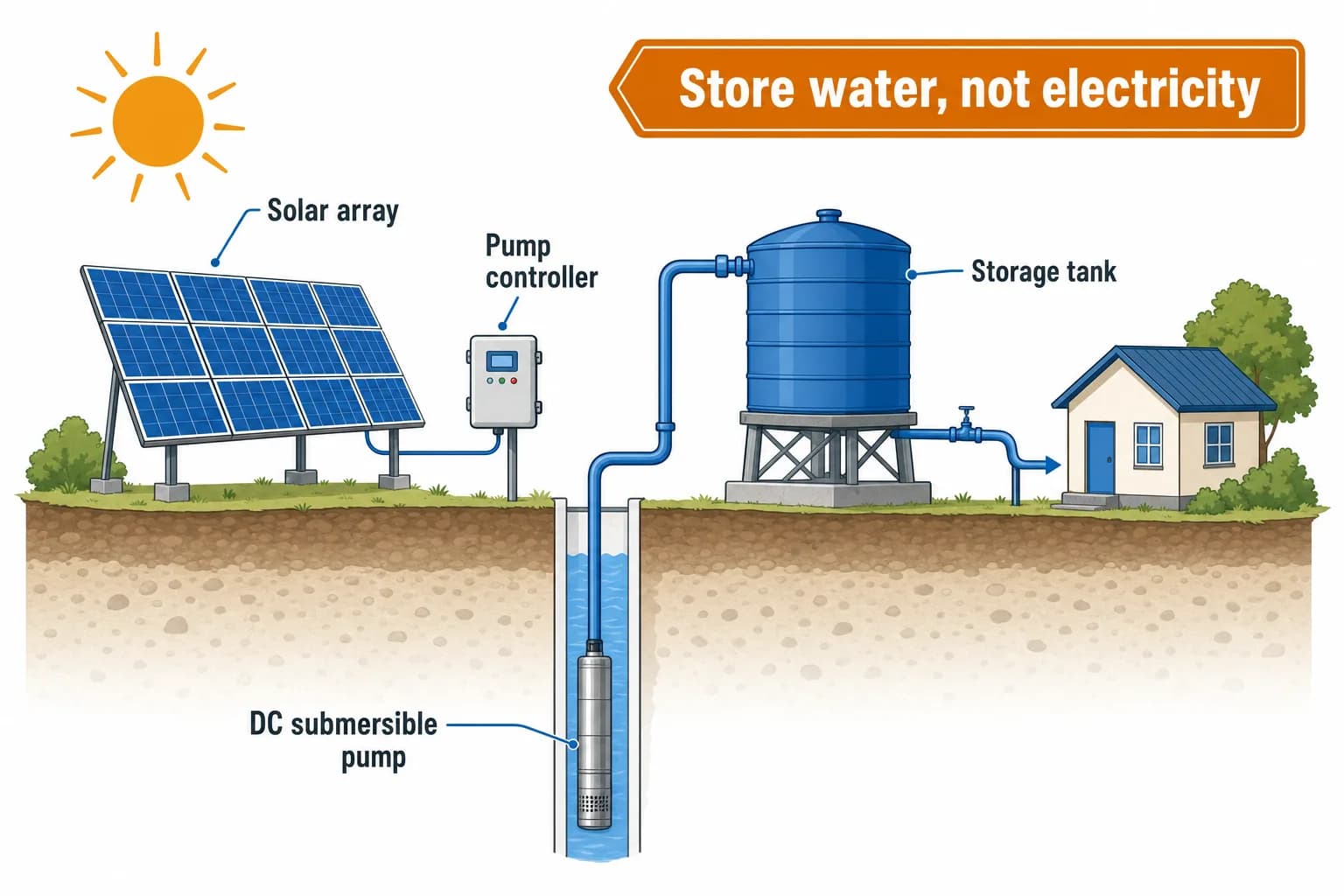
Four parts: panels, controller, pump, storage. Sunlight becomes DC power, the controller smooths it, the pump lifts water all day, and a tank holds it for when you need it.
The core difference from a grid system is the delivery philosophy. A conventional submersible waits in silence, then delivers 10+ GPM in short blasts against a pressure tank. A solar pump runs nearly all day at 1-5 GPM. Over a full sun day, even 2 GPM adds up to more than a thousand gallons - far more than most households or stock tanks use. The system works because storage decouples supply from demand: the sun fills the tank on its schedule, you draw water on yours.
The pump controller is the quiet hero: it performs maximum-power-point tracking (squeezing usable power out of weak morning and cloudy-day light), boosts low-light voltage so the pump starts early and runs late, and shuts the pump off when a float switch says the tank is full or a well probe says the water level has dropped to the pump intake.
Where Solar Genuinely Beats the Grid
Solar pumping is not a novelty - for three use cases it is routinely the cheapest reliable option.
- Livestock watering. The classic case: a stock tank half a mile from the nearest power line. Running grid power to a remote pasture can cost more than the entire solar system; a panel, controller, and low-flow pump filling a big stock tank replaces both the power line and the daily water haul. Ranchers pair it with 2-3 days of tank storage to ride through weather.
- Off-grid homes and cabins. A solar pump filling an elevated or hillside storage tank gives an off-grid property gravity-fed water with no generator runtime. A small booster pump or the elevation itself provides house pressure.
- Remote irrigation. Gardens, orchards, and drip systems match solar delivery beautifully - irrigation demand peaks in exactly the sunny weather that maximizes pump output.
- Backup for grid outages. Paired with a hand pump or generator, a small solar setup keeps water flowing through extended outages - a growing reason homeowners add one alongside a conventional system.
The honest counter-case: a grid-connected suburban home with normal usage is usually better served by a conventional submersible pump. Solar earns its premium where the grid is far, unreliable, or expensive to reach.
DC vs AC Solar Pumps
Most solar pumps are DC by design - panels make DC, and skipping the inverter keeps the system simple and efficient. AC via inverter earns its place at bigger scales.
Within DC pumps, two mechanisms dominate: helical rotor (deep lifts, modest flow, few wear parts) and diaphragm (cheaper, shallower service, diaphragms are replaceable wear items). Centrifugal DC pumps serve high-flow, shallow-lift jobs. A good dealer sizes the mechanism to your depth - which is why the well record matters more than the brand.
Sizing: Depth, Demand, and Worst-Month Sun
Three numbers size every solar pumping system: total dynamic head (how far up), gallons per day (how much), and your location's worst-month sun hours (how long the pump gets to work).
- Total dynamic head (TDH). Pumping water level + elevation from wellhead to tank + friction losses in the pipe. This decides which pumps are even candidates.
- Daily demand. Household planning figures run 50-100 gallons per person per day; livestock needs range from about 10-25 gallons per head per day for cattle down to a few gallons for small stock. Total it for your worst season.
- Design sun hours. Systems are sized to the worstmonth you need water (often December for homes, July for stock in hot country). Dividing daily gallons by sun hours gives the GPM the pump must sustain; TDH plus GPM gives the pump model; the pump's power curve gives the panel wattage - typically oversized about 25-30% to cover panel aging, dust, and haze.
Batteries vs Storage Tanks
The most reliable place to store solar energy for water is in the water. Tanks beat batteries on cost, lifespan, and failure mode.
The standard design: pump to a tank holding 2-3 days of demand, control it with a float switch, and deliver by gravity (roughly 0.43 PSI per foot of elevation - a tank 100 feet up a hill delivers about 43 PSI) or a small pressure/booster system. In hard-freeze country, bury the supply lines below frost depth and plan the tank like any other exposed plumbing - the same logic as winter well maintenance.
What Solar Well Pumping Costs in 2026
Solar pumping is a system purchase, not a pump purchase. Kits look cheap; complete installed systems are where real budgets live.
Ranges synthesized from 2024-2026 manufacturer and installer pricing. Depth, trenching, and storage are where quotes grow - budget toward the higher end of your local quotes rather than the kit price, and get 2-3 of them.
Compare honestly against the alternatives: a grid power-line extension to a remote site is often quoted per pole or per foot and can exceed the entire solar budget, while a generator-driven pump carries permanent fuel and maintenance costs. For the pump-side comparison with conventional systems, see the well pumps guide and the pump replacement cost guide.
Frequently asked questions
Keep reading
Sources & further reading
- Private Drinking Water Wells — U.S. EPA (accessed July 2026)
- Groundwater Wells (well basics, pumping levels) — USGS Water Science School (accessed July 2026)
- Wellowner.org - Well System Components — Water Systems Council (accessed July 2026)