Chat with us, powered by LiveChat
Well Owner Guide

Well Water Smells Like Rotten Eggs? Causes and Fixes

That sulfur stink is almost always hydrogen sulfide gas - usually miserable but harmless. The fastest way to fix it is to figure out where it comes from. One 30-second test tells you whether to spend $80 on a water heater part or treat the whole well.

12 min readUpdated June 2026
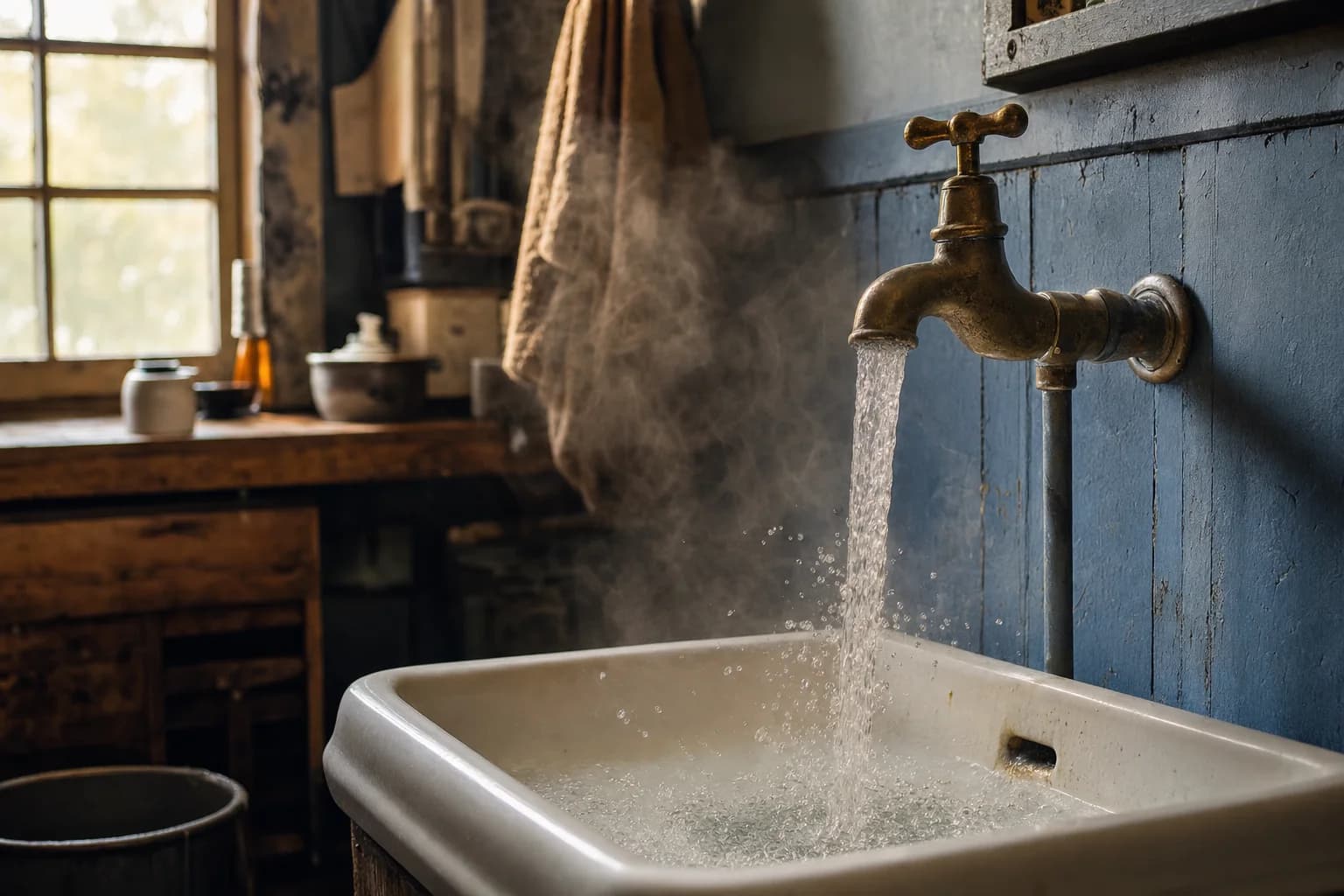
A glass of well water beside a kitchen faucet in a rural home

The Rotten-Egg Diagnostic: Where Is the Smell Coming From?

Before you spend a dollar on treatment, run one quick test. Where the smell shows up tells you whether the problem is your water heater or your well - and those are completely different fixes.

Run the cold water at the tap closest to your pressure tank, then run the hot water, then check a few other taps around the house. Note carefully which taps the rotten-egg smell appears at. That single observation is the most valuable diagnostic you can make, and it can save you thousands of dollars.

The 30-second diagnostic
Hot water only? The gas is being made inside your water heater - the fix is a roughly $80 anode rod, not a filter. Both hot and cold? The hydrogen sulfide is coming from your well or aquifer - you need whole-house treatment. Just one fixture? It is a local drain or P-trap, and the water itself is fine.
Decision tree for diagnosing a rotten-egg sulfur smell in well waterA flow chart. Start by running both the hot and cold taps and noting where the smell appears. If the smell is in the hot water only, the gas is being made inside the water heater - replace the magnesium anode rod with an aluminum-zinc rod and flush the tank. If the smell is in both the hot and cold water, the hydrogen sulfide is coming from the well or aquifer - install a whole-house point-of-entry oxidation filter and test for sewage contamination if the smell appeared suddenly. If the smell is at only one fixture, it is a local drain or P-trap, not the water itself - clean and disinfect that drain.RUN HOT + COLD TAPSWhere does the rotten-egg smell appear?HOT WATER ONLYBOTH HOT + COLDONE FIXTURE ONLYWATER HEATERSulfur bacteria react with themagnesium anode rodTHE FIX (DIY, under $100)Swap the magnesium rod for analuminum-zinc alloy rod, thenflush the tank.WELL / AQUIFERDissolved hydrogen sulfide gasor sulfur bacteria in the sourceTHE FIX (whole house)Point-of-entry oxidation filter(air injection, chlorine, orcatalytic carbon by level)LOCAL DRAINBacteria in a P-trap or aseldom-used drain - not the waterTHE FIX (local)Clean and disinfect the drain;the well water itself is fine.IF THE SMELL APPEARED SUDDENLYA sudden sewage smell - especially with cloudy water or illness - cansignal contamination. Test for coliform bacteria and nitrate beforeassuming it is harmless. Do NOT boil the water - that drives gas into the air.
Fig. 1The rotten-egg diagnostic decision tree. Which taps carry the smell tells you the source and the fix: hot water only points to the water heater anode rod, both taps to the well or aquifer, and a single fixture to a local drain. A sudden onset always warrants a contamination test first. NOT TO SCALE.
What the smell pattern tells you - and what to do about it
Where you smell itWhat it meansPrimary fix
Hot water onlySulfate-reducing bacteria are reacting with the magnesium anode rod inside your water heater.Replace the magnesium rod with an aluminum-zinc alloy rod and flush the tank (DIY, under $100).
Both hot and coldHydrogen sulfide is entering the home directly from the aquifer or well casing.Install a whole-house point-of-entry (POE) oxidation filter sized to your H2S level.
Only one specific tapLocalized bacteria in a seldom-used drain or a P-trap - not the water supply.Clean and disinfect that drain; the well water itself is not the problem.

Why does the hot-water-only case work this way? Water heaters create a warm, oxygen-poor environment that sulfur bacteria love. The standard magnesium sacrificial anode rod - the part designed to corrode so your steel tank does not - is highly reactive, and that reactivity is exactly the catalyst needed to convert dissolved sulfates into hydrogen sulfide gas. Swapping it for an aluminum-zinc rod changes the galvanic chemistry and the zinc helps neutralize the bacteria, usually killing the hot-water odor outright. For anything coming from both taps, keep reading - that is a well problem.

What Causes the Smell: Hydrogen Sulfide and Sulfur Bacteria

The rotten-egg odor is hydrogen sulfide gas. It behaves like the fizz in a soda - trapped under pressure in your pipes, then released the instant you open a faucet.

Hydrogen sulfide (H2S) is a colorless gas that dissolves readily into water. Because it is a gas and not a suspended solid, a standard sediment filter cannot touch it, and it stays in solution under the pressure of the aquifer and your plumbing - then off-gasses into the air the moment that pressure is released at the tap.

The vast majority of the gas in private wells is natural and biological. In groundwater, an estimated 95 percent of hydrogen sulfide is generated by sulfate-reducing bacteria (SRB) - harmless microorganisms that thrive in the anaerobic, oxygen-depleted conditions deep underground. They consume organic matter and use dissolved sulfate as an energy source much the way we use oxygen, and the byproduct of that respiration is hydrogen sulfide. The gas is most common in deep wells drilled into shale, sandstone, or bedrock near coal, peat, or oil deposits.

43 million

Americans rely on private wells that no agency tests or treats - the owner alone is responsible for water quality, and roughly a third have never tested at all

Source: USGS

Human activity can add to the problem. A shallow well with a cracked surface seal, poor wellhead protection, or inadequate annular grout lets stormwater carry organic material - fertilizer, animal waste, decaying plants - down into the aquifer, feeding the bacteria and spiking H2S production. In rare cases the sudden onset of a sulfur or sewage smell signals something far more serious, which we cover in the contamination section below.

Where Sulfur Smells Are Most Common

Whether your well makes hydrogen sulfide is driven by the bedrock beneath you. If you live over the Gulf Coast limestone or a sulfate-rich Midwest aquifer, a rotten-egg smell is the regional norm, not a fluke.

The EPA and USGS have mapped more than 14 major H2S-prone geological areas in the United States, and occurrence correlates strongly with hydrocarbon deposits, peat formations, and sedimentary coastal plains where ancient organic matter was trapped. Here is where the problem concentrates:

Regional hydrogen-sulfide prevalence in private wells (USGS, EPA, and academic sampling)
RegionWhy it occurs thereNotes from the data
Gulf Coast & Sunbelt (TX, FL)Sulfur-rich limestone aquifers and coastal-plain organic deposits.Texas and Florida show the highest natural H2S occurrence; Texas alone has four discrete H2S-prone areas. ~12% of Floridians (2.7M+ people) are on private wells.
Midwest & Great Plains (IL, IN, MI, MO, ND)Shallow aquifers meeting rich agricultural soils and deeper shale.In the Prairie du Chien-Jordan aquifer (~75% of Upper Mississippi basin withdrawals), anoxic water readily strips oxygen from sulfate to make H2S. ~8% of tested Midwest feedlot sources exceeded 1,000 mg/L sulfate.
Western states (CA, AZ, CO, ID, UT, WY)Volcanic rock, geothermal springs, and oil/gas extraction zones.Isolated but severe. In northern Ada County, Idaho, USGS found H2S a prominent nuisance alongside radon.
Appalachia & Mid-Atlantic (PA, AR, KY)Acidic shale and sandstone bedrock that hosts sulfur-reducing bacteria.Wells drilled into these formations frequently encounter SRB and the rotten-egg odor.

The takeaway: if you own a well over limestone, shale, or a sulfate-rich aquifer, a sulfur smell is common and almost always a treatable nuisance. Local rules, geology, and assistance programs vary sharply by state - our state-by-state well owner guides cover all 50 states, and you can see real well depths near your address on our interactive well map.

Is It Safe to Drink? Health Effects and the EPA Limit

The offensive odor suggests danger, but at typical residential levels hydrogen sulfide is an aesthetic problem - not an ingestion hazard. The real risk is inhalation in confined spaces.

0.05 mg/L

EPA Secondary Maximum Contaminant Level for hydrogen sulfide - a non-enforceable, aesthetic standard set for odor and taste, not toxicity

Source: EPA

At the concentrations usually found in residential drinking water (about 0.05 to 5.0 mg/L), hydrogen sulfide poses no ingestion hazard. The human nose is extraordinarily sensitive - able to detect the gas at levels far below any harmful dose - so the water becomes unbearable to drink long before it could ever make you sick. That is why the EPA classifies H2S as a secondary(non-enforceable) contaminant, regulated only to prevent foul taste, odor, and corrosion.

The hidden danger: inhalation in confined spaces
Drinking the water is safe, but the gas itself is flammable and profoundly toxic when inhaled in concentrated, enclosed spaces - a poorly ventilated shower, a basement pump room, or a well pit. Above roughly 100 ppm in air, hydrogen sulfide causes "olfactory fatigue": it deadens your sense of smell, so you believe it is gone while it keeps building. OSHA lists H2S among the leading causes of workplace gas-inhalation deaths, and well-pit fatalities - including would-be rescuers who collapse trying to help - are a documented reality. Never enter a well pit or unventilated pump house if a strong sulfur odor is present.

The gas also attacks your plumbing. Hydrogen sulfide is corrosive to iron, steel, copper, and brass: it converts copper to black copper sulfide, creating pinhole leaks, tarnishes silverware, leaves greasy black stains on fixtures, and fouls the resin in water softeners. Those are good reasons to treat a sulfur problem even though the water is safe to drink.

When a Sulfur Smell Signals Real Contamination

Most of the time this is a harmless-but-miserable aesthetic issue. But a sudden sewage smell can be the first sign that surface pollution or septic effluent has reached your well.

Hydrogen sulfide from natural sulfate-reducing bacteria is a slow, steady nuisance. What should worry you is a smell that appears suddenly, especially a sewage-like odor rather than a mineral rotten-egg one. When a failing septic system or a sewer leak reaches your aquifer, the water typically tests positive for coliform bacteria and elevated nitrate as well.

Treat a sudden sewage smell as a contamination event until proven otherwise
If the rotten-egg or sewage smell came on suddenly and is paired with any of these - cloudy or discolored water, increased turbidity, or household members with gastrointestinal illness - stop drinking the water and switch to bottled water immediately. This pattern can indicate a septic breach or surface-water intrusion. Get a laboratory test for coliform bacteria and nitrate before you assume the smell is just geology. See our coliform bacteria and E. coli guide for what a positive result means and how to respond.

The bottom line: a long-standing, steady sulfur smell that tracks the hot/cold pattern above is almost certainly a treatable nuisance. A new or worsening one deserves a full bacteria-and-nitrate test first, then treatment.

How to Test for Hydrogen Sulfide

Testing for H2S is tricky because the gas escapes the instant water leaves your pressurized pipes. A standard mail-in vial will give you a false negative.

Because hydrogen sulfide volatilizes within minutes, a sample mailed to a lab almost always reads clean even when your tap reeks. You have two reliable options:

  • On-site field test kits. Reagent kits that change color the instant they contact water at the wellhead. Professional field kits run roughly $90 to $116 and are excellent for baseline screening.
  • Preserved certified lab tests. For real estate transactions or precise treatment sizing, a certified lab supplies a sample bottle pre-filled with a chemical preservative that locks the sulfide into solution so it survives transit. These run about $40 to $139.

Whenever hydrogen sulfide is present, test for the company it keeps. The same anaerobic conditions that create the gas often dissolve heavy metals like arsenic and manganese into the water, so a comprehensive panel - coliform bacteria, nitrate, arsenic, and metals - is strongly recommended alongside the H2S screen.

Hydrogen sulfide testing and routine well test costs (2025-2026)
ItemTypical LowTypical HighNotes
On-site H2S field test kit (reagent, reads at the wellhead)$90$116Professional-grade kits cover 50 tests. Best for baseline screening. [UGA Extension]
Certified-lab H2S test (preserved sample bottle)$40$139Required for real estate or precise treatment sizing. [UMass Amherst]
Baseline annual panel (coliform, pH, nitrate, dissolved solids)$40$139Recommended every year for any private well. [CDC]

National 2025-2026 ranges from the cited research; local prices vary.

Reading Your Results: What the Concentration Means

Hydrogen sulfide results come back in mg/L (the same as parts per million). The number tells you which treatment you actually need - and over-buying is a common, expensive mistake.

Results are reported in milligrams per liter (mg/L), which equals parts per million (ppm). Match your number to the band below to see both what you will notice and the treatment that fits:

Hydrogen sulfide concentration bands and the treatment they call for
ConcentrationWhat you noticeRequired action
Under 0.05 mg/LBelow the human odor threshold - water is essentially odor-free.No action required.
0.05 - 1.0 mg/LMild musty or swampy odor, mainly noticeable in hot water.Catalytic carbon filtration or simple aeration.
1.0 - 3.0 mg/LDistinct rotten-egg odor; corrosive to plumbing, tarnishes silverware.Air Injection Oxidation (AIO) system.
3.0 - 10.0+ mg/LSevere, unbearable odor; accelerated corrosion and black slime in pipes.Continuous chlorine injection with a contact/retention tank.

What to Do Right Now

If a strong sulfur smell appears suddenly, a few immediate steps protect your household - and one common reflex actually makes the air in your home more dangerous.

Do NOT boil the water - it makes things worse
It is a common myth that boiling will "purify" the smell away. Because hydrogen sulfide is a dissolved gas, heating the water simply forces it out of the liquid and into the breathable air of your kitchen faster - concentrating the toxic gas indoors and intensifying the odor while removing none of it permanently. If your nitrate is high or unknown, boiling also concentrates that. Ventilate and treat the source instead.

Immediate steps for a sudden, strong sulfur smell

As needed

Work through these in order. The first two are about safety; the rest are about figuring out whether you have a nuisance or a contamination event.

  • Do not boil the water
    Boiling drives the gas into your indoor air and concentrates any nitrate - it does not fix the smell.
  • Ventilate
    Open bathroom windows while showering and make sure any well house or basement pump room has active airflow.
  • Check for sewage symptoms
    Cloudy or discolored water, increased turbidity, or household illness alongside the smell can mean a septic breach. Stop drinking the water if you see them.
  • Switch to bottled water for drinking and cooking
    Until a test confirms the source is harmless sulfur bacteria and not bacterial sewage contamination.
  • Never enter a confined well space
    A well pit, enclosed pump house, or deep basement can pool lethal gas. Get professional ventilation and testing first.
DIY-safe
  • Run the hot/cold diagnostic sniff test
  • Field-kit screening at the wellhead
  • Replace a water heater anode rod (magnesium to aluminum-zinc)
  • Shock chlorination following state extension guidelines
Call a licensed pro
  • Installing a whole-house AIO or chlorine injection system (cutting the main line, drain routing)
  • Inspecting or repairing the well casing and annular grout seal
  • Any entry into a well pit or enclosed pump house with a strong odor

Treatment Options Compared

Hydrogen sulfide cannot be filtered out like sediment - it is a gas. Reverse osmosis lets it pass and softeners are destroyed by it. The gas must be oxidized into solid sulfur and then filtered out.

To eliminate hydrogen sulfide you have to oxidize it: a chemical reaction steals electrons from the gas, converting it into tiny solid sulfur particles that a media bed can then catch. Treatment must happen at the point of entry (POE), where water first enters the house - a point-of-use under-sink filter cleans drinking water but leaves the gas in your shower, which is exactly where the worst odor and inhalation risk live. The right oxidizer depends on your concentration.

Hydrogen sulfide treatment methods compared (2026 national ranges)
MethodBest forEffectivenessInstall costOperating cost
Air Injection Oxidation (AIO)1.0 - 10.0 ppmHigh; reliable and chemical-free$1,500 - $4,000$50 - $150/yr
Chlorine injectionOver 10.0 ppm or high iron bacteriaVery high; most powerful$1,500 - $4,000+$200 - $500/yr
Catalytic carbon filtrationUnder 1.0 ppm (trace)Moderate; exhausts quickly$400 - $2,000$50 - $100/yr
Shock chlorinationLocalized blooms; temporaryLow; short-term relief only$20 (DIY) - $300Per event

Costs are 2026 national ranges from the cited research. Reverse osmosis and ion-exchange softeners do not remove H2S - the gas passes through RO and fouls softener resin - so they are never a substitute for oxidation.

Air Injection Oxidation (AIO) is the modern gold standard for the common 1.0-10.0 ppm range. It holds a pocket of compressed air at the top of a media tank; as well water sprays through it, the oxygen oxidizes the gas into solid sulfur that the media catches, then the system backwashes the sulfur away on a schedule. It is chemical-free, low-maintenance (media replacement every 5 to 10 years), and also handles iron and manganese.

Chlorine injection is for extreme levels above 10.0 ppm or wells co-infected with iron bacteria, where atmospheric oxygen is not strong enough. A feed pump injects liquid chlorine, a retention tank gives it contact time to oxidize the gas and kill bacteria, and a backwashing carbon filter removes the sulfur and leftover chlorine. It is the most powerful option but the most maintenance-heavy - refilling chemical monthly and cleaning the injector pump.

Catalytic carbon adsorbs trace amounts under 1.0 ppm but exhausts quickly if levels fluctuate. Shock chlorination - pouring concentrated chlorine down the casing - gives only temporary relief, because the bacteria live deep in the aquifer rock where bleach cannot reach, so the smell returns within weeks. For the full step-by-step shock procedure, see our shock chlorination guide. If a recurring smell keeps coming back after a correct shock, that is your signal to call a licensed well contractor and move to continuous treatment.

Prevention: Well Construction and the Grout Seal

Sulfate-reducing bacteria need a food supply. Keeping surface water - and the organic matter it carries - out of your well is the best long-term defense.

Prevention starts the day the well is drilled. SRB need organic matter to fuel their metabolism, so when surface water carrying fertilizer or decaying plant matter seeps down the sides of the casing, it effectively feeds them. Proper grouting - filling the annular space between the borehole and the casing with cement or bentonite clay - is the critical barrier. Many state codes require a minimum surface seal (often around 20 feet, deeper through contaminated zones), and a failing grout seal is a primary vector for both sulfur and bacterial contamination.

If an older well suddenly develops a strong sulfur odor, that change itself is worth investigating: hire a licensed well contractor to inspect the structural integrity of the casing and surface seal. Our well maintenance guide and well water upkeep guide cover the full annual routine that keeps these problems from developing.

Financial Assistance Programs

A $4,000 oxidation system is a real burden. Federal and state programs help eligible private well owners pay for testing and treatment.

Federal. The USDA Household Water Well System Grant Program funds non-profits and tribes to run revolving loan funds that provide low-interest loans to low-income homeowners for well treatment, repair, or new drilling. The national non-profit Water Well Trust builds and repairs wells for low-income families in critical need.

State. Many states fund private-well help through their Clean Water Funds. Iowa's Grants to Counties program disburses up to $5 million to local health departments, reimbursing homeowners for testing, well reconstruction, and plugging abandoned wells. Minnesota's Clean Water Fund grants cover free lab testing and direct mitigation help to install treatment systems - contact your county health department or Soil and Water Conservation District. Our state guides point to local programs in all 50 states.

Frequently asked questions

The rotten-egg odor is hydrogen sulfide gas (H2S), produced almost entirely by harmless sulfate-reducing bacteria that live in the oxygen-free conditions deep in many aquifers. Because it is a dissolved gas - not a particle - it stays trapped under the pressure of your plumbing and then off-gasses the instant you open a faucet, exactly like the fizz escaping a soda. The single most useful clue is which taps it comes from: hot water only points to your water heater, while both hot and cold points to the well itself.
That points to a reaction inside your water heater, not the well. The standard magnesium sacrificial anode rod - the part that protects the steel tank from rust - is highly reactive, and it acts as a catalyst that converts naturally occurring sulfates in the water into hydrogen sulfide gas. The warm tank is also an ideal home for sulfur bacteria. Swapping the magnesium rod for an aluminum-zinc alloy rod usually eliminates the hot-water odor for a fraction of the cost of a filter.
Turn off the water and power (or gas) to the heater, relieve the tank pressure, and unscrew the magnesium anode rod from the top of the tank. Replace it with an aluminum-zinc alloy rod: the different galvanic potential halts the chemical reaction and the zinc helps neutralize the sulfur bacteria. Flush the tank afterward. This is a DIY job - a socket wrench, basic plumbing know-how, and about 30 minutes - and the parts run under $100.
Usually yes. At the concentrations typically found in residential wells (under about 5 mg/L), hydrogen sulfide is an aesthetic nuisance, not an ingestion hazard - the EPA regulates it only as a secondary contaminant for taste and odor. Your nose detects it at levels thousands of times lower than any harmful dose, so you would refuse to drink it long before it could hurt you. The real danger is inhalation in confined spaces (well pits, pump houses), and the rare case where a sudden sewage smell signals actual bacterial contamination.
No - boiling makes the problem worse and can be dangerous. Because hydrogen sulfide is a dissolved gas, heating the water simply drives it out of the liquid and into the breathable air of your kitchen faster, concentrating the toxic gas indoors and intensifying the odor. Boiling does nothing to permanently remove it. If you also have unknown or high nitrate, boiling concentrates that too. Ventilate and treat the source instead.
No - and it can be an expensive mistake. Water softeners are built to remove calcium and magnesium hardness, not gases. Hydrogen sulfide passes straight through and actively fouls and destroys the resin beads inside the softener. You need an oxidizing treatment (air injection, chlorine injection, or catalytic carbon), and any softener must be installed downstream of that treatment, not in place of it.
No. The gas evaporates within minutes of the water leaving your pressurized plumbing, so a standard vial mailed to a lab almost always reads a false negative. Use an on-site field test kit that reacts at the wellhead, or a certified laboratory that supplies a sample bottle pre-filled with a chemical preservative that locks the sulfide into solution.
It depends on the level. For trace amounts under 1.0 ppm, catalytic carbon filtration ($400-$2,000) is enough. For the common 1.0-10.0 ppm range, an Air Injection Oxidation (AIO) system ($1,500-$4,000) is the chemical-free gold standard. Above 10.0 ppm, or with co-occurring iron bacteria, you need a continuous chlorine injection system with a retention tank. All of these must be installed at the point of entry so the gas is gone from your shower water too.
Usually not. Pouring concentrated chlorine down the casing gives temporary relief, but the sulfate-reducing bacteria live deep inside the microscopic fractures of the aquifer rock where the bleach cannot reach. The odor typically returns within a few weeks. Shock chlorination is useful for a localized bloom or after a repair, but a recurring smell means you need a continuous point-of-entry oxidation system, not more bleach.
Yes, though it is rare. If the smell appears suddenly, is accompanied by cloudy water or a change in color, or your household develops gastrointestinal illness, it can indicate surface runoff or a failing septic system reaching your well. In that case the water will usually also test positive for coliform bacteria and elevated nitrates. Stop drinking it and test immediately - see our coliform bacteria guide.
Hydrogen sulfide is highly corrosive. It reacts with copper plumbing to form copper sulfide - a black compound that thins the pipe walls and eventually causes pinhole leaks. The same gas tarnishes silverware and leaves greasy black stains on fixtures. The corrosion is one reason to treat a sulfur problem even though the water is safe to drink.
In 2025-2026, professional installation of an Air Injection Oxidation or chlorine injection system ranges from $1,500 to $4,000+, depending on system size and your water chemistry. Smaller catalytic carbon setups for trace levels run $400-$2,000. A water heater anode rod swap for a hot-water-only problem is under $100.

Keep reading

Sources & further reading

  1. Domestic (Private) Supply WellsUSGS (accessed June 2026)
  2. Hydrogen Sulfide and Sulfur Bacteria in Well WaterMinnesota Department of Health (accessed June 2026)
  3. Hydrogen Sulfide / Sulfur (Rotten Egg Odor) in WaterUniversity of Georgia Extension (C 858-8) (accessed June 2026)
  4. Hydrogen Sulfide (Rotten Egg Odor) in Water WellsPenn State Extension (accessed June 2026)
  5. Hydrogen Sulfide and Sulfate in Private Drinking Water WellsUMass Amherst (CAFE) (accessed June 2026)
  6. Hydrogen Sulfide in Drinking WaterTexas A&M / Texas Water Resources Institute (accessed June 2026)
  7. Secondary Drinking Water Standards: Guidance for Nuisance ChemicalsU.S. EPA (accessed June 2026)
  8. Secondary Constituent Levels (Drinking Water)Texas Commission on Environmental Quality (accessed June 2026)
  9. Hydrogen Sulfide / Carbonyl Sulfide - Public Health StatementCDC / ATSDR (accessed June 2026)
  10. Hydrogen Sulfide - HazardsU.S. OSHA (accessed June 2026)
  11. Report to Congress: Sources of Hydrogen Sulfide in GroundwaterU.S. EPA (NEPIS) (accessed June 2026)
  12. Ground-Water Quality in the Prairie du Chien-Jordan Aquifer, Upper Mississippi River BasinUSGS (WRIR 98-4248) (accessed June 2026)
  13. Ground-Water Quality in Northern Ada County, Lower Boise River Basin, IdahoUSGS (FS 054-98) (accessed June 2026)
  14. Feedlot 99 - Water Quality (Sulfate Concentrations)USDA APHIS (accessed June 2026)
  15. Whole-House Water Filter Cost GuideThe Well.guide (accessed June 2026)
  16. Well Water Filtration System CostHomeGuide (accessed June 2026)
  17. Funding for Private Well OwnersPrivate Well Class (Illinois State Water Survey / RCAP) (accessed June 2026)
  18. Iowa Private Well Grants (Grants to Counties)Iowa Health & Human Services (accessed June 2026)
  19. Private Well Protection Grant Program (Clean Water Fund)Minnesota Department of Health (accessed June 2026)

Find out exactly what is in your water

A field or certified test is the only way to know whether your sulfur smell is harmless gas or a contamination warning - and DrillerDB can show you how deep wells run near you.