
What Trihalomethanes Are and How They Form
Trihalomethanes (THMs) are not naturally in groundwater. They are byproducts of chlorination - they appear only when chlorine reacts with natural organic matter in the water.
Trihalomethanes are a family of volatile organic compounds created by a single chemical reaction: a disinfectant (chlorine, or sometimes bromine) reacting with natural organic matter (NOM) - decaying leaves, humic and fulvic acids, and soil runoff dissolved in the water. Labs measure that organic load as Total Organic Carbon (TOC). Pristine groundwater usually carries very little of it, which is why deep, protected aquifers tend to form almost no THMs.
The four THMs the EPA regulates together as Total Trihalomethanes (TTHMs) are:
- Chloroform (trichloromethane) - the most common, typically about 75% of the THM profile. It forms when chlorine reacts with organic matter alone.
- Bromodichloromethane (BDCM) - forms where natural bromide is present; the most studied of the brominated THMs.
- Dibromochloromethane (DBCM) - another brominated THM, favored in bromide-rich water.
- Bromoform - the least common, generally only in coastal aquifers or areas with high geologic bromide.
When a Well Owner Should Actually Care
This is the most important section on the page. THMs are primarily a municipal-water issue. For a typical untreated private well, they are usually a non-issue. Four specific situations change that.
Most well owners can skip THM testing entirely. A deep, properly sealed drilled well that draws clean bedrock water and has never been chlorinated has no chlorine source and little organic matter - so it forms essentially no THMs. Spending money to test such a well for THMs is rarely worthwhile. THMs become relevant only in these cases:
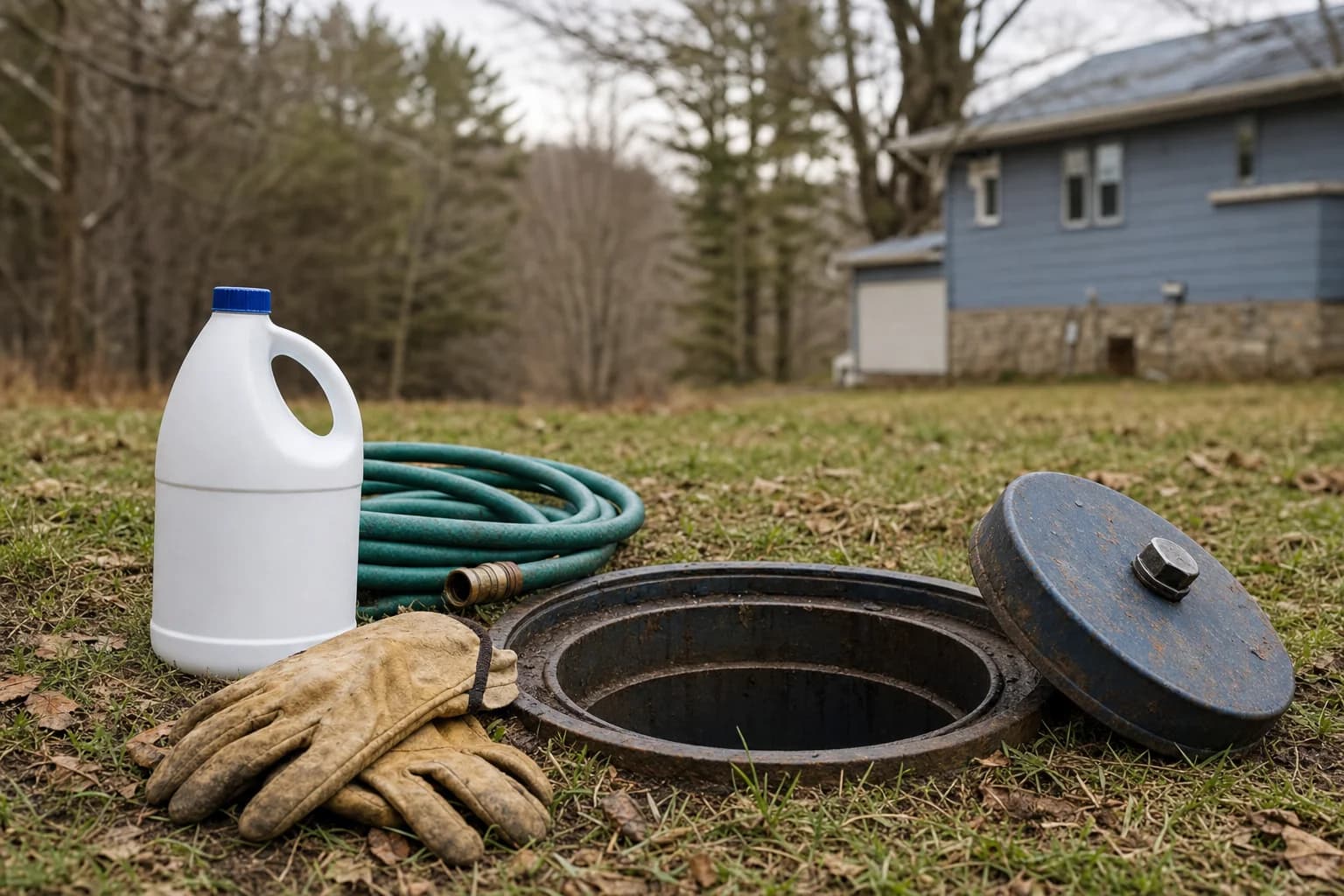
- After shock chlorination - if you did not flush well. Drillers and homeowners routinely shock-chlorinate a well to clear iron bacteria, biofouling, or a positive coliform test. If the well is not aggressively flushed afterward, the residual chlorine keeps reacting with organic matter in the borehole and produces THMs. A chlorine smell that lingers for days is the signal.
- Cisterns and hauled water. Low-yield homes that store water in a cistern - especially when hauled municipal water (already chlorinated) is dumped in, or when homeowners add bleach to fight algae - create an ideal THM factory if organic debris is present.
- Continuous chlorine injection. Shallow wells fighting surface-water intrusion or iron bacteria sometimes run a continuous chlorination system. Without pre-filtration to strip organic matter first, that system acts as a steady THM generator.
- Aquifers polluted by recycled municipal water. Wells in or near urban areas can draw THMs and unreacted chlorine that leaked from city mains, lawn irrigation, or chlorinated septic effluent into the shallow aquifer.
Where THMs Show Up in Private Wells
When THMs do appear in wells, the geography follows two patterns: urban aquifers that recycle municipal water, and shallow surface-water-influenced wells in high-organic settings.
Chloroform is the single most frequently detected volatile organic compound in U.S. domestic wells, but it usually turns up at very low concentrations - well below the EPA benchmark. Roughly 40 to 43 million Americans (about 12 to 15% of the population) rely on private wells, and large USGS surveys help map where detections cluster.
47% vs 14%
USGS found volatile organic compounds (including THMs) in about 47% of sampled wells in urban areas versus only 14% in rural areas - the urban gap is driven by recycled, chlorinated municipal water leaking into shallow aquifers.
Source: USGS
Urban and suburban aquifers
The clearest regional signal is urban versus rural. In a sweeping USGS chloroform assessment, detection rates ran higher in public-supply wells than domestic wells - about 36.5% versus 17.6% at a low 0.02 ug/L threshold. USGS explicitly ties the urban excess to the "recycling" of chlorinated municipal water: leaking city mains, lawn irrigation with treated water, and chlorinated wastewater all leach THMs and leftover chlorine into the shallow aquifers private wells tap. If your well sits in a built-up area sharing an aquifer with a municipal system, your odds of a detection rise.
Surface-water-influenced and high-organic wells
The second pattern is geologic. Shallow, large-diameter bored or dug wells that pull young water heavy with organic matter are primed to form THMs the moment any chlorine is introduced. Recent USGS sampling found chloroform in about 34% of domestic groundwater resources in the eastern Sacramento Valley, and the San Joaquin Valley shows similar detection rates - though, again, rarely above regulatory limits. Tennessee Department of Health data from 2020-2022 mapped widespread THM presence in community systems on shallow groundwater, mirroring the risk for private wells in the same aquifers.
Local geology and rules vary sharply by state. Our state-by-state well owner guides cover testing requirements and programs for all 50 states, and you can see how deep the wells near you are drilled on our interactive well map - depth is a strong clue to whether a well draws shallow, organic-rich water or deeper, protected water.
Health Effects and the EPA Limit
The concern with THMs is chronic, long-term exposure - not an acute emergency. Regulators balance that long-term risk against the immediate, proven benefit of disinfecting water.
Chlorinating drinking water eradicated waterborne killers like cholera and typhoid, and that benefit is not in dispute. The trade-off is that long-term exposure to THMs carries its own health concerns. Exposure is not only from drinking: because THMs are volatile, inhalation and skin contact while showering, running the dishwasher, or doing laundry can contribute meaningfully to total exposure.
The health effects associated with long-term THM exposure include:
- Cancer risk. Chloroform and BDCM are classified as possible human carcinogens, and chronic exposure has been linked in epidemiological studies to higher rates of bladder and colorectal cancer.
- Reproductive concerns. Some studies suggest a possible association between high THM exposure and adverse pregnancy outcomes such as low birth weight, though the evidence is not conclusive.
- Organ effects. Very high chronic exposure may affect the liver, kidneys, and nervous system.
80 ppb
EPA Maximum Contaminant Level for Total Trihalomethanes (0.080 mg/L), set as a running annual average for public systems. Haloacetic acids (HAA5) have a separate 60 ppb limit. Private wells are not legally bound by these, but they are the health benchmark to compare your result against.
Source: U.S. EPA
Keeping it in proportion. The 80 ppb standard has stood for two decades. Independent groups such as the Environmental Working Group argue it is a cost compromise rather than a pure health number and suggest a much stricter 0.15 ppb health guideline. That is a reasonable debate to be aware of - but for a well owner, the practical point is simpler: an untreated well almost never approaches 80 ppb, and the scenario that pushes a well there is recent or ongoing chlorination of organic-rich water. Fix that cause and the numbers fall.
How to Test for THMs
THMs are colorless and nearly tasteless, so a certified lab test is the only way to confirm them - and the sampling technique is unusually strict because the chemicals evaporate.
DIY strips and pitcher-filter kits are useless for THMs. These are volatile organics at parts-per-billion levels; measuring them requires a certified lab running gas chromatography / mass spectrometry. Ask the lab for EPA Method 524.2 or 524.3 for Total Trihalomethanes and VOCs, and EPA Method 552.2 or 552.3 if you also want haloacetic acids (HAA5).
Sampling matters more here than for almost any other contaminant. THMs will escape into any trapped air, so the lab's vial must be filled with zero headspace - no air bubbles - and kept chilled until analysis.
Prices vary by region and lab; a single TTHM panel from a local certified lab is the cheapest path if THMs are your only question. Confirm method and sample-handling instructions when you order.
Reading Your THM Results
Labs report THMs in mg/L or ug/L (parts per billion). The conversion is simple, and the action levels are graded - most well results fall well under the benchmark.
Two units appear on reports, and they line up directly:
- 0.080 mg/L = 80 ug/L = 80 ppb - the EPA Total Trihalomethanes benchmark.
If Your Test Comes Back High
A high THM result is not an acute emergency the way a bacteria hit is - but there are immediate steps, and one common instinct (boiling) that does not help the way people expect.
Immediate steps if your well tests above the 80 ppb benchmark:
- Switch to bottled or treated water for drinking, cooking, and ice while you arrange treatment. This is a chronic-exposure issue, so this is a sensible precaution rather than a panic measure.
- Reduce the inhalation pathway. Run bathroom exhaust fans during and after showers and keep showers cooler and shorter, since hot water releases more THMs into the air.
- Stop adding chlorine. If you run a continuous chlorination system, pause it (where safe to do so) until a professional assesses the organic load - you are likely making THMs faster than you are removing bacteria.
- Treat with GAC and fix the cause. Move to the treatment below, and look at whether thorough flushing after chlorination, pre-filtration, or a cleaner water source would stop THMs forming in the first place.
Treatment Options Compared
Granular Activated Carbon (GAC) is the gold standard for THM removal, but only when it is sized for enough contact time. Reverse osmosis covers a single tap; aeration works for THMs but not HAAs.
Granular Activated Carbon (GAC) is the standard whole-house fix. It adsorbs THMs onto coconut-shell carbon - but only if the water spends enough time in the bed. A dual-tank lead-lag setup (a first tank takes the load, a second polishes) costs roughly $1,000 to $2,500 installed, with the media replaced every 12 to 36 months. Its weak spot is heavy iron, manganese, or sediment, which foul the carbon - so pre-filter those first.
Want the full picture across every treatment technology? Our well water treatment guide compares RO, carbon, UV, aeration, and softeners for each contaminant so you can match a system to your test results.
Reverse osmosis (RO) at the kitchen tap is the cheapest way to secure drinking water: an under-sink unit pairs a membrane with a carbon stage and removes THMs well for $300 to $800. It only treats one tap (so it does not address the shower inhalation pathway) and wastes several gallons per gallon produced, which makes it a poor fit for low-yield wells.
Aeration strips volatile THMs by spraying or bubbling air through the water in a vented tank - effective for THMs (up to about 70%) but useless for haloacetic acids, which it can even concentrate. Use it only when THMs are the sole problem and HAAs are confirmed absent.
Prevention: Stop THMs Forming in the First Place
THMs cannot form without organic matter for the chlorine to react with. The cheapest control is removing the precursor or the residual chlorine - not treating downstream.
- Flush thoroughly after shock chlorination. The most common cause of well THMs is leaving residual chlorine in the borehole. After a shock treatment, let it sit the recommended time, then flush vigorously to the outdoors (never into the septic) until the chlorine residual is gone. See our well chlorination guide for the full step-by-step.
- Use the right bleach, dosed correctly.Use plain unscented sodium hypochlorite, never "fresh scent" or splashless products, and dilute it before pouring. Over-dosing a well or cistern guarantees a bigger THM spike.
- Pre-filter organic matter on continuous systems. If your well needs continuous chlorination, install sediment and organic-load (TOC) removal before the injection point, and a GAC polishing tank after the contact tank to strip any THMs that do form.
- Favor deeper, sealed construction. Shallow, large-diameter bored or dug wells pull in organic-rich surface water. A deep, properly sealed drilled well in a confined aquifer naturally carries far less organic matter, so it forms fewer THMs even if it is chlorinated. A licensed well contractor can advise on casing, sealing, or going deeper.
- Keep up routine well care. Good general well maintenance and water upkeep reduce the bacteria problems that lead to chlorination in the first place.
Financial Assistance
Whole-house treatment can be expensive. The main federal vehicle for private well owners is a USDA-funded low-interest loan program.
The USDA Rural Decentralized Water Systems Grant Program funds qualified nonprofits to run revolving loan funds for rural homeowners. Through those lenders, an eligible household can borrow up to a $15,000 maximum at a fixed 1% interest rate over a 20-year term, and a nonprofit may also award subgrants up to $15,000. Funds can construct, refurbish, or install treatment systems - including point-of-entry GAC or RO - on an individually owned household well.
Frequently asked questions
Keep reading
Sources & further reading
- National Primary Drinking Water Regulations (TTHM Maximum Contaminant Level) — U.S. EPA (accessed June 2026)
- Stage 1 and Stage 2 Disinfectants and Disinfection Byproducts Rules — U.S. EPA (accessed June 2026)
- Trihalomethanes (THMs) in Drinking Water - Fact Sheet — National Ground Water Association (NGWA) (accessed June 2026)
- Disinfection Byproducts (DBPs) in Drinking Water — Minnesota Dept. of Health (accessed June 2026)
- Total Trihalomethanes in Drinking Water - Information for Consumers — Massachusetts Dept. of Public Health (accessed June 2026)
- Factors Associated with Sources, Transport, and Fate of Chloroform in Public and Domestic Wells — U.S. Geological Survey (accessed June 2026)
- Volatile Organic Compounds in the Nations Ground Water and Drinking-Water Supply Wells — U.S. Geological Survey (Circular 1292) (accessed June 2026)
- Updated Information on the Locations of Domestic Well Use — U.S. Geological Survey (accessed June 2026)
- Quality of Groundwater Used for Domestic Supply, Eastern Sacramento Valley — U.S. Geological Survey (accessed June 2026)
- Total Trihalomethanes (TTHMs) Annual Mean Concentrations - Tennessee Water Systems — Tennessee Dept. of Health (accessed June 2026)
- Toxicological Profile for Chloroform (Health Effects) — CDC / ATSDR (accessed June 2026)
- Trihalomethanes - Health Information Summary — New Hampshire Dept. of Environmental Services (accessed June 2026)
- Thousands of US Water Systems Show Dangerous Levels of Cancer-Causing Chemicals (EWG analysis) — The New Lede (Environmental Working Group) (accessed June 2026)
- Drinking Water Lab Testing Services and Pricing — Paragon Laboratories (accessed June 2026)
- Drinking Water Analysis Price List — AmTest Laboratories (accessed June 2026)
- Water Quality Laboratory Testing Services — Des Moines Water Works (accessed June 2026)
- Advanced Well Water Test (mail-in DBP panel) — Tap Score / SimpleLab (accessed June 2026)
- Granular Activated Carbon (GAC) Fact Sheet (EBCT and removal) — Water Quality Association (accessed June 2026)
- Interim Recommendations for Granular Activated Carbon Installations — New York State Dept. of Health (accessed June 2026)
- Aeration for Treatment of Volatile Organic Compounds (White Paper) — Ohio EPA (accessed June 2026)
- Rural Decentralized Water Systems Grant Program — USDA Rural Development (accessed June 2026)
- Rural Decentralized Water Systems Grant - Program Fact Sheet — USDA Rural Development (accessed June 2026)