Chat with us, powered by LiveChat
NewDrillerDB Enterprise SalesSee it
Vestaburg, Michigan

Well Drillers Near Vestaburg, Michigan

Vestaburg area wells most commonly encounter thick clay with sand and some gravel layers at depth. Typical residential wells are screened in deeper sand or sand/gravel aquifers below 60–120 ft.

Showing contractors within 60 miles of Vestaburg. 104 results found.

Typical depth
90 ft
Water table
45 ft
Contractors
104

104 Contractors

Sort by:

Bogart Well Drilling LLC

Active Driller
Crystal, MI 48818
Well DrillingWell Maintenance

Crystal Clear Water Well Systems LLC

Active Driller
Crystal, MI 48818
Well DrillingWell Maintenance
Trayer Water Wells logo

Trayer Water Wells

Active Driller
Vestaburg, MI 48891
Well DrillingPump InstallationPump Repair+3 more
Bigard & Huggard Drilling Inc logo

Bigard & Huggard Drilling Inc

4.6 (5)
Mt Pleasant, MI 48858
ExcavationExploration DrillingProduction
Brad Malley Well Drilling Inc logo

Brad Malley Well Drilling Inc

Active Driller
Mt Pleasant, MI 48622
Well DrillingMud RotaryPump Installation+3 more
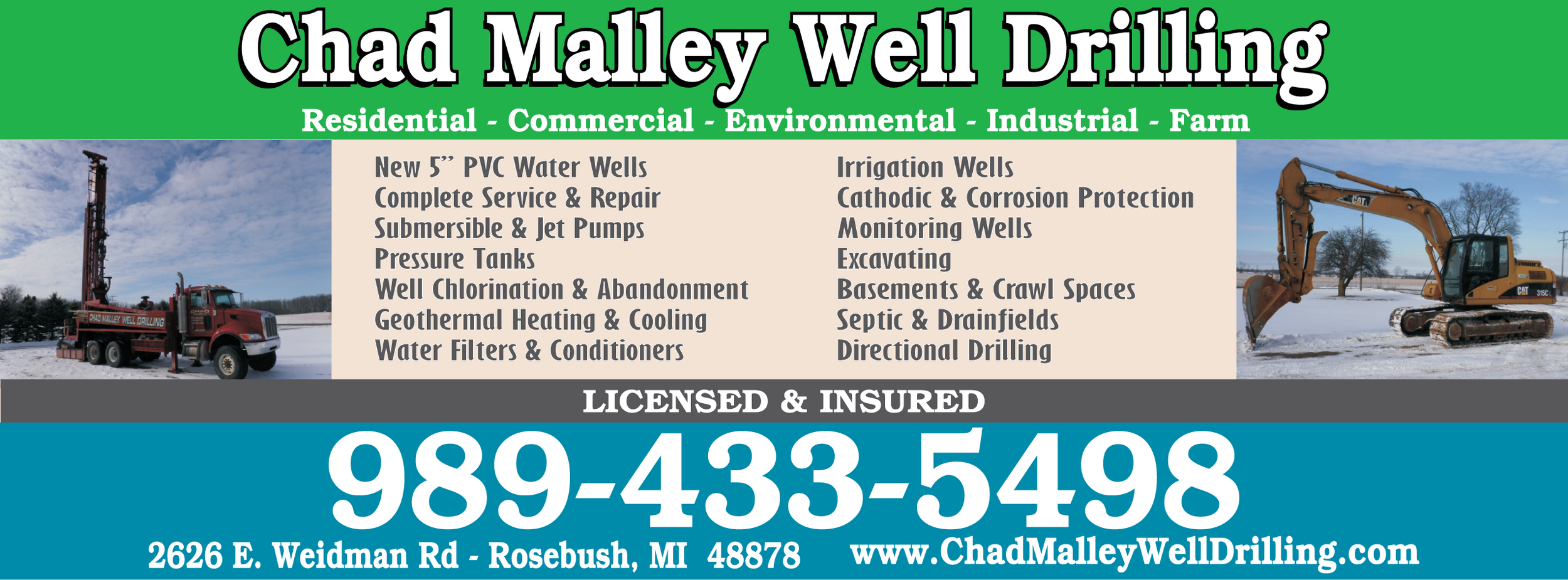
Chad Malley Well Drilling logo

Chad Malley Well Drilling

Active Driller
Rosebush, MI 48878
Well DrillingPump InstallationWell Maintenance+6 more

Courtright Water Wells Inc

Active Driller
Mecosta, MI 49332
Well MaintenanceFiltrationWater Softening
Culligan Total Water of Greenville & Rockford logo

Culligan Total Water of Greenville & Rockford

4.2 (5)
Greenville, MI 48838
Water TestingFiltrationReverse Osmosis+3 more
Elmore Well Service logo

Elmore Well Service

5.0 (5)
Barryton, MI 49305
Well DrillingPump ServicesWell Maintenance+1 more
Gates Drilling & Services logo

Gates Drilling & Services

Active Driller
Mt Pleasant, MI 48858
Residential Well DrillingCommercial Well DrillingWell Maintenance
Lilly Well Drilling & Repair logo

Lilly Well Drilling & Repair

Mt Pleasant, MI 48858
Residential Well DrillingCommercial Well DrillingWell Maintenance

Moore Water Well Drilling LLC

Farwell, MI 48622
Well DrillingPump InstallationWell Maintenance
R. Oberlitner Well Drilling & Repair logo

R. Oberlitner Well Drilling & Repair

Ithaca, MI 48847
Well DrillingPump ServicesWater Softening

Sawade Drilling Co Inc

Active Driller
Mt Pleasant, MI 48858
Well Drilling

Anderson Well Drilling LLC

Newaygo, MI 49337
Well DrillingWell Maintenance
Bayes Water Treatment logo

Bayes Water Treatment

5.0 (5)
Sparta, MI 49345
Well DisinfectionWater TestingFiltration+2 more
Bendall Well Drilling logo

Bendall Well Drilling

5.0 (1)
Owosso, MI 48817
Well DrillingResidential Well DrillingPump Installation+3 more
Bendall Well Drilling & Water Softening logo

Bendall Well Drilling & Water Softening

Corunna, MI 48817
Well DrillingPump InstallationWell Maintenance+3 more

Bob Wahlfield Drilling

Sparta, MI 49345
Residential Well DrillingCommercial Well DrillingPump Installation+3 more

Browse all of Michigan

See every licensed contractor across Michigan.

← All Michigan contractors

Well records near Vestaburg

Check depths and logs of existing wells in the area before you drill.

Open well map →

Michigan well owner guide

Costs, permits, maintenance tips for private wells in Michigan.

Open guide →

Not in Vestaburg? Search well drilling near me in the national directory, or find well repair near me and well pump service near me for work on an existing well.

View Local Geology Report

A geological estimate for the Vestaburg area.

Typical Well Depth
90 ft
Static Water Level
45 ft
Recommended Method
Rotary - Mud Circulation

Detailed Summary

Based on a synthesis of well logs across the Vestaburg region, the standardized geological profile usually begins with topsoil or sandy clay, underlain by thick clay deposits. Sporadic thin sand or fine sand layers are present but are most significant in the deeper subsurface, frequently appearing between depths of 60–120 ft. Deeper gravels or sand and gravel units, representing reliable aquifers, appear at or below these depths, serving as primary water sources for residential and high-capacity wells. The most successful wells are screened in these coarse materials, where yields of 10–15 GPM or more are typical. Casing is generally set through the upper fine-grained layers and into the first substantial sand or gravel zone. Grouting (typically bentonite slurry or cement) is present from surface to casing depth. The most common drilling method is rotary/mud circulation, though older wells may use cable tool or hollow rod techniques.

Expected Geological Layers

Depth (Feet)Formation TypeDescriptionCharacteristics
01 ftTopsoilThin organic-rich surface soilColor: Brown
Hardness: Soft
115 ftClay (Sandy or Plain)Stiff to soft clay, sometimes sandyColor: Gray/Tan
Hardness: Moderate
1535 ftAlternating Sand/ClayThin granular sand, occasional clay or fine sand lensesColor: Gray/Yellow
Hardness: Soft to firm
3560 ftClayStiff to soft clay, abundantColor: Gray
Hardness: Moderate
6090 ftSand (occasional Sand & Gravel)Medium to coarse sand, water-bearing; transitions may include some gravelColor: Tan/Yellow
Hardness: Loose
90125 ftClay with occasional Sand LensesMostly clay with discrete sandy layersColor: Gray
Hardness: Moderate
125165 ftSand & Gravel (Main Aquifer)Thick zone of sand and gravel, reliable water-bearing stratumColor: Gray/Tan
Hardness: Loose

Frequently Asked Questions

A typical residential well in the Vestaburg area is drilled to approximately 90 feet to ensure a reliable water supply of 5-15+ gallons per minute.

The static water level, or water table, is typically found around 45 feet below the surface in this region.

Based on a synthesis of well logs across the Vestaburg region, the standardized geological profile usually begins with topsoil or sandy clay, underlain by thick clay deposits. Sporadic thin sand or fine sand layers are present but are most significant in the deeper subsurface, frequently appearing between depths of 60–120 ft. Deeper gravels or sand and gravel units, representing reliable aquifers, appear at or below these depths, serving as primary water sources for residential and high-capacity wells. The most successful wells are screened in these coarse materials, where yields of 10–15 GPM or more are typical. Casing is generally set through the upper fine-grained layers and into the first substantial sand or gravel zone. Grouting (typically bentonite slurry or cement) is present from surface to casing depth. The most common drilling method is rotary/mud circulation, though older wells may use cable tool or hollow rod techniques.