Your well pulls water from somewhere underground, but knowing exactly which aquifer takes a little digging. Here is how to find it, starting with a free search of your own address.
An aquifer is not an underground lake or river, even though it is often pictured that way. It is a layer of rock, sand, or gravel that is permeable enough to hold water in the spaces between the grains or in cracks in the rock, and to let that water move through it. When a well is drilled deep enough to reach a water-bearing layer like this, a pump can draw water up out of it. Some aquifers are a thin, patchy layer of sand a few feet thick. Others are thick, regionally extensive formations that supply water to thousands of wells across several states.
Aquifers are generally grouped into two categories, and knowing which type feeds your well says a lot about how it behaves.
Sits closer to the surface with no solid, impermeable layer directly above it. The water level in this type of aquifer, called the water table, rises and falls with rainfall and the season. Because it is closer to the surface and more directly connected to it, a water-table aquifer is generally more exposed to surface contamination such as fertilizer, septic system effluent, or spills.
Sits below a layer of clay or dense rock that traps the water under pressure. That confining layer offers some added protection from surface contamination, though it is not a guarantee of clean water. In some locations the pressure is strong enough that water rises in the well without pumping - a true artesian well - though most confined-aquifer wells still need a pump.
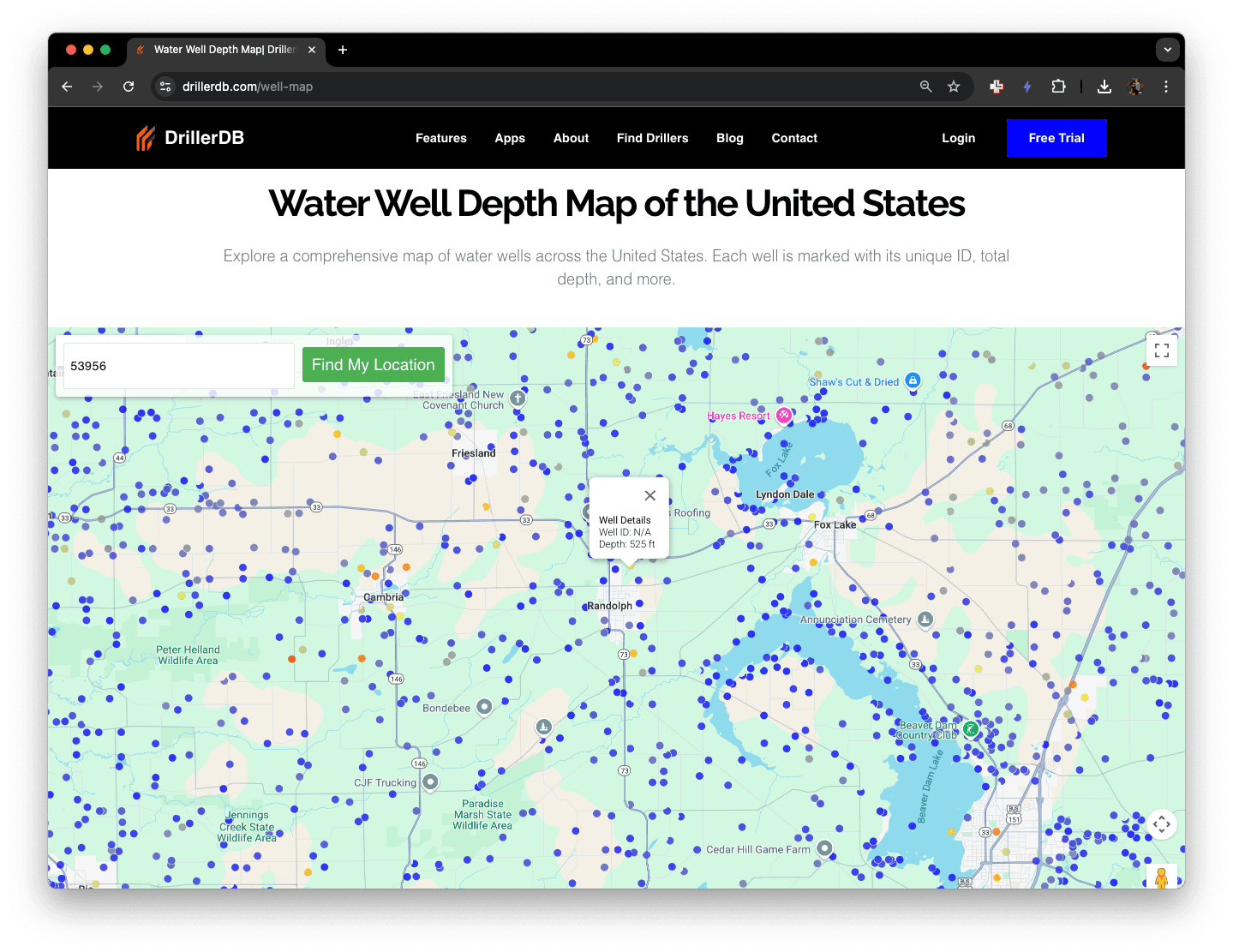
The fastest way to get a real sense of what is under your property is to see what other wells nearby have already found. We built two free tools for exactly this:
Enter your address on the water table depth tool to see the likely depth to water and typical well depth pulled from real well records near you. Or open the well map to browse 23 million well records directly and see the depth and details drillers logged for wells close to your property. Neither tool will name your exact aquifer, but the depths and patterns you see are a strong clue.
None of these is perfect on its own. Used together, they will get most homeowners a confident answer.
Knowing your aquifer is not just trivia. The type of formation your well taps affects a few practical things:
Exactly which of these apply to you depends on where you live. Check our state well guides for the contaminants and conditions most common in your state.
"What aquifer am I in" does not always have one fixed answer for a given address. A single property can have a shallow, unconfined aquifer near the surface and a separate, deeper confined aquifer below it, each with different water quality and yield. Which one your well draws from depends entirely on how deep it was drilled and which layer it was finished in - which is exactly why the well log and the depth records covered above matter so much more than a general regional aquifer map.
There is no single lookup that will hand you a definitive answer for every address, but you can get close. Start by searching your address on our well map and water table depth tool to see what nearby wells have found. Then check your own well construction log, if you have one - it usually names the formation or aquifer the well was completed in. For a broader view, the USGS Principal Aquifers map and your state geological survey both publish aquifer boundary maps you can check against your location.
The most direct answer is your well construction log, also called a well completion report. Licensed well drillers file one with the state after drilling, and it typically records the depth, the geologic formation encountered, and often the aquifer name. If you cannot find your log, our guide to locating your well record walks through how to pull it. Absent a log, a driller who knows the local geology can often tell you which aquifer a well of a given depth in your area is drawing from.
Yes, this happens more than people expect. Aquifers are not always one continuous layer under an entire neighborhood. A shallow well and a deep well on properties next to each other can tap completely different water-bearing layers, each with its own depth, yield, and water chemistry. Even two wells on the same property, drilled at different times to different depths, can end up finished in different aquifers.
Yes, the geology your water passes through has a lot to do with what ends up in it. Some bedrock aquifers are associated with naturally occurring arsenic or radon, some sand and gravel aquifers run higher in iron or manganese, and limestone or other carbonate aquifers tend to produce harder water. None of this is universal - it varies by region and even by specific formation - so it is not something you can predict from the aquifer type alone. A water test is still the only way to know what is actually in your water. Our state well guides cover the contaminants that show up most often in each state.
It varies widely, sometimes within the same square mile. The fastest way to get a real answer for your location is to search your address on our water table depth tool, which pulls typical water table depth and well depth from actual well records near you, or to browse nearby wells directly on our well map. Those depths reflect what drillers have actually found in the ground nearby, which is more useful than a generalized regional estimate.
Start with a search of your own address, then confirm what you find against your well log or a state aquifer map. Once you know the aquifer, you will have a much better read on what to expect from your well and what to test for.
