
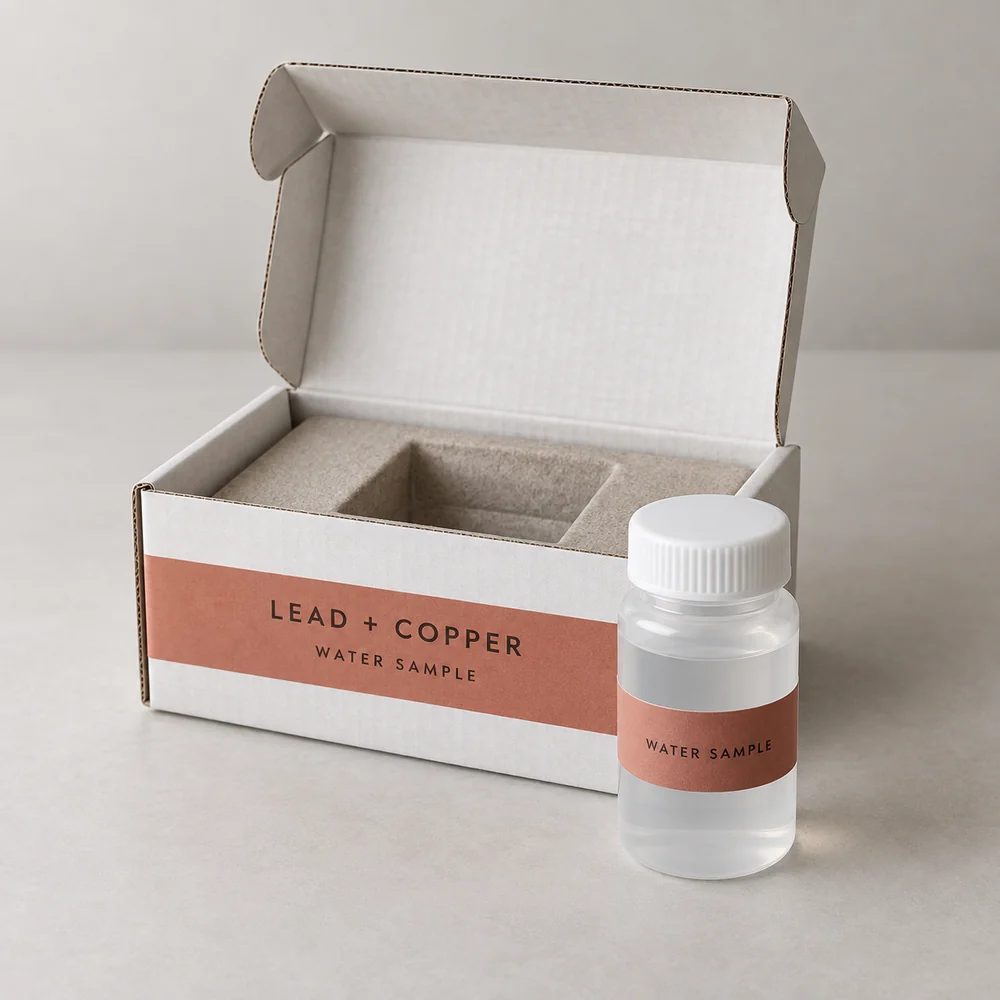
At-home collection. Laboratory analysis.
Lead & Copper Check
Tests for lead and copper that leach from older pipes, solder, and fixtures.
$60.00
Sample kit and laboratory analysis
Order this testCollect at home. Prepaid return packaging included.
Who tests your sampleFulfilled and analyzed by SimpleLab and its Tap Score certified laboratory network.
See what this test measuresLaboratory analysis
Fulfilled by SimpleLab and its Tap Score certified laboratory network.
Prepaid sample return
Collection instructions and prepaid return packaging come with your kit.
A report you can read
See what was measured and how your results compare with drinking-water guidelines.
Test coverage
What it tests for
- Lead (reported in parts per billion)
- Copper (reported in mg/L)
- A first-draw tap sample reflecting real exposure from plumbing
Results apply to the items listed here. One test does not check for every possible contaminant.
About this test
The Lead & Copper Check measures lead and copper in your tap water - metals that usually come not from the well itself but from your home's plumbing. Older homes with copper pipes joined by lead solder, brass fixtures, or lead service lines are most at risk, and corrosive (low-pH) well water makes leaching worse. Lead is especially dangerous for infants and young children, with no safe level of exposure. Because the metal comes from the plumbing, a first-draw sample from your tap is the right way to measure what you actually drink. This kit gives you precise lead and copper levels.
Why it matters
Lead is a potent neurotoxin with no safe exposure level, and it is particularly harmful to the developing brains of infants and children. Because lead and copper leach from household plumbing rather than the aquifer, a well's source-water test will not catch them - only a tap sample will. If levels are elevated, flushing, fixture replacement, or a certified filter can reduce exposure.
Who it is for
Best for homes built before 1990, any home with copper plumbing or brass fixtures, and households with infants, young children, or anyone pregnant. Especially important if your water is corrosive or you have measured a low pH.
From your tap to the lab
How at-home water testing works
Your kit arrives
Order the test you need. Your kit includes sample containers, collection instructions and prepaid return packaging.
Collect and return your sample
Follow the instructions for your test, then send your sample to the lab using the included return packaging.
Read your laboratory report
Review what was found in your sample, how it compares with drinking-water guidelines and the guidance included with your results.
Before you order
Questions about this test
- Why test at the tap instead of the well?
- Lead and copper usually come from your home's plumbing - pipes, solder, and fixtures - not the aquifer. A first-draw sample from the tap measures what you actually drink, which is what matters for health.
- Which homes are most at risk for lead?
- Homes built before 1990, those with copper pipes joined by lead solder, brass fixtures, or lead service lines. Corrosive (low-pH) water increases leaching from any of these.
- What if my lead level is high?
- Use only cold, flushed water for drinking and cooking, avoid it for infant formula, and consider replacing fixtures or installing a certified lead-reduction filter. Address corrosive water at the source and retest.
Your next step
Lead & Copper Check
Collect your sample at home and send it to the lab.
$60.00
Order this testWater tests are fulfilled and analyzed by SimpleLab and its Tap Score certified laboratory network. DrillerDB helps you order the right test for your well; lab analysis and reporting are provided by SimpleLab.