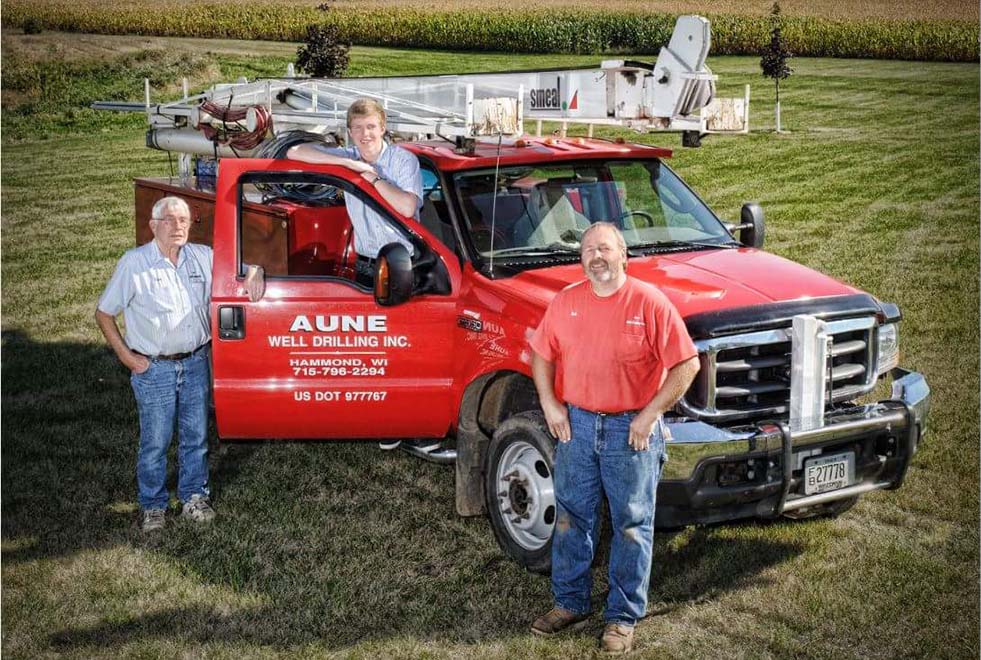
FEATURED

4.9 (7)
Frederic, WI 54837-5706
Well DrillingDual RotaryWell Inspection+7 more
The typical River Falls area well penetrates a surficial sand/gravel or clay, then a major limestone/dolostone layer, reaching total finished depths between 140 and 280 feet. Most residential wells (5-15+ GPM) are completed at 120-140 feet, with higher-yield or deeper wells up to 270-280 feet. The main aquifer is in limestone, often below sand/sandstone and local clay.
Showing contractors within 60 miles of River Falls. 88 results found.
Check depths and logs of existing wells in the area before you drill.
Open well map →Costs, permits, maintenance tips for private wells in Wisconsin.
Open guide →Not in River Falls? Search well drilling near me in the national directory, or find well service and repair near me and well pump service near me for work on an existing well.
A geological estimate for the River Falls area.
In the River Falls region, representative wells consistently encounter a surficial unconsolidated zone (sand, gravel, or clay) from the surface to about 30-40 feet, occasionally a sandstone/sandrock layer to around 80-90 feet, then transition into limestone bedrock, which is typically the main aquifer and continues to the bottom of the wells. The wells reviewed show casing generally installed through unconsolidated material (usually from surface to 80-120 feet), with grout or bentonite seals in the upper 20 feet. Static water levels typically lie between 45 and 200 feet, averaging around 120-130 feet below ground. Residential wells (5-15+ GPM) most often finish around 140 feet, though deeper completions up to 270-280 feet are found in high-capacity or low-yield areas. The prevailing geological sequence is: (1) sand/gravel/clay (0-40 ft), (2) sandstone or sandrock (variable, up to 90 ft), (3) limestone/dolostone (main aquifer, 80+ ft to bottom).
| Depth (Feet) | Formation Type | Description | Characteristics |
|---|---|---|---|
| 0 – 5 ft | Topsoil/Clay | Topsoil, sometimes silty clay or caving sand | Color: Brown/Yellows Hardness: Soft |
| 5 – 40 ft | Sand/Gravel | Sandy or gravelly zone, sometimes thin clay interbeds | Color: Light brown/yellow Hardness: Loose to medium |
| 40 – 90 ft | Sandstone/Sandrock | Soft sandstone or sandrock, sometimes partly cemented | Color: Yellow/Brown Hardness: Soft to medium |
| 90 – 270 ft | Limestone/Dolostone | Limestone or dolostone (main aquifer), can be hard, fractured; called 'limestone,' 'limerock,' or just 'lime' | Color: Light yellow/gray Hardness: Hard |