FEATURED
Active Driller4.3 (14)
Black River Falls, WI 54615
Well DrillingResidential Well DrillingCommercial Well Drilling+18 more
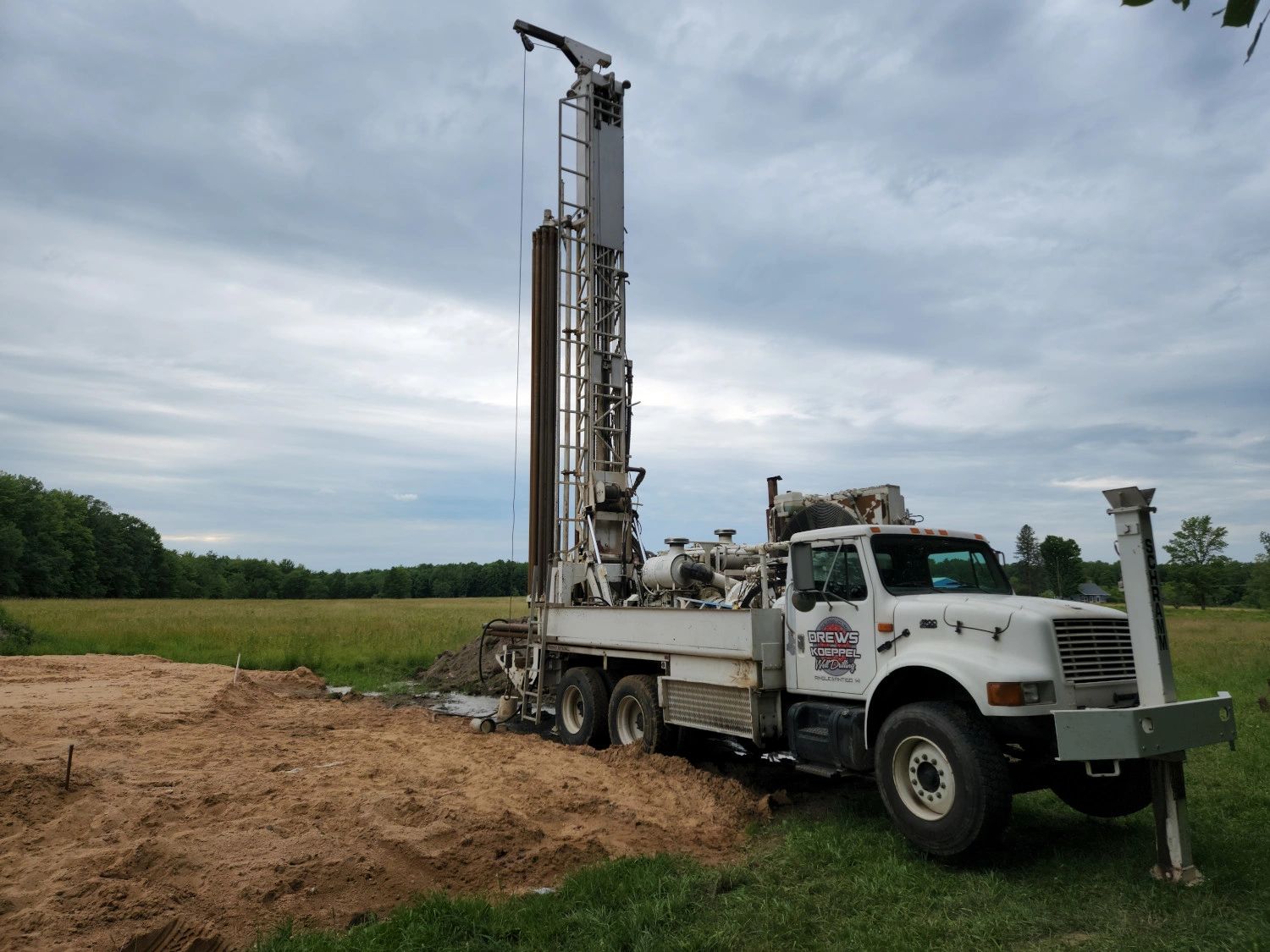
Typical Nekoosa-area well penetrates a surficial sand aquifer with interbedded clay, with screen set in sand/gravel or clean sand between 30–56 ft bgs. Average static water level is 15–20 ft. Construction is generally rotary-mud with steel or poly casing and a cement/bentonite grout seal.
Showing contractors within 60 miles of Nekoosa. 55 results found.
Check depths and logs of existing wells in the area before you drill.
Open well map →Costs, permits, maintenance tips for private wells in Wisconsin.
Open guide →Not in Nekoosa? Search well drilling near me in the national directory, or find well service and repair near me and well pump service near me for work on an existing well.
A geological estimate for the Nekoosa area.
Based on synthesis of the well logs, the predominant geology in the greater Nekoosa region is a thick, predominantly sandy surficial sequence (20–40+ ft), occasionally underlain by a clay or silty layer (about 5–15 ft thick), and then returning to sand/gravel below. Some higher capacity wells in regional logs extend deeper (to ~80 ft) and may terminate in or on weathered sandstone. Most domestic (residential) wells are completed between 30–45 ft with screens set in clean sand or sand/gravel. Static water levels range from 13 to 32 ft but average about 17–20 ft. Construction is almost universally by rotary-mud with 6 in. steel or poly casing, and a bentonite or cement grout is typical. Sufficient yields for residential purposes (5–15+ GPM) are consistently achieved in the screened sand/gravel interval. High-capacity irrigation wells are typically set to 75–81 ft and may involve sandstone.
| Depth (Feet) | Formation Type | Description | Characteristics |
|---|---|---|---|
| 0 – 3 ft | Topsoil | Dark brown/organic surface soil layer | Color: Dark brown Hardness: Soft |
| 3 – 23 ft | Sand | Loose to medium sand, commonly fine to medium grained, minor gravel in some logs | Color: Yellow-brown to light brown Hardness: Loose to medium |
| 23 – 35 ft | Clay/Silty Clay | Clay or silty clay, sometimes with some sand; plastic | Color: Gray to brown Hardness: Firm to stiff |
| 35 – 44 ft | Sand | Clean sand or sand with minor gravel, main aquifer zone for residential wells | Color: Pale yellow/tan Hardness: Medium |
| 44 – 56 ft | Sand & Gravel | Sand and gravel mix, main productive aquifer for high capacity wells | Color: Variable brown/yellow-gray Hardness: Medium |
| 56 – 78 ft | Coarse Sand & Gravel | Predominantly coarse sand and gravel, occasionally minor cobbles; highly transmissive | Color: Tan/gray Hardness: Medium |
| 78 – 81 ft | Weathered Sandstone | Soft to 'rotten' sandstone, base of unconsolidated aquifer sequence | Color: Tan/brown Hardness: Soft |