Active Driller5.0 (20)
AMHERST, WI 54406-
Well DrillingPump ServicesPressure Tank Installation
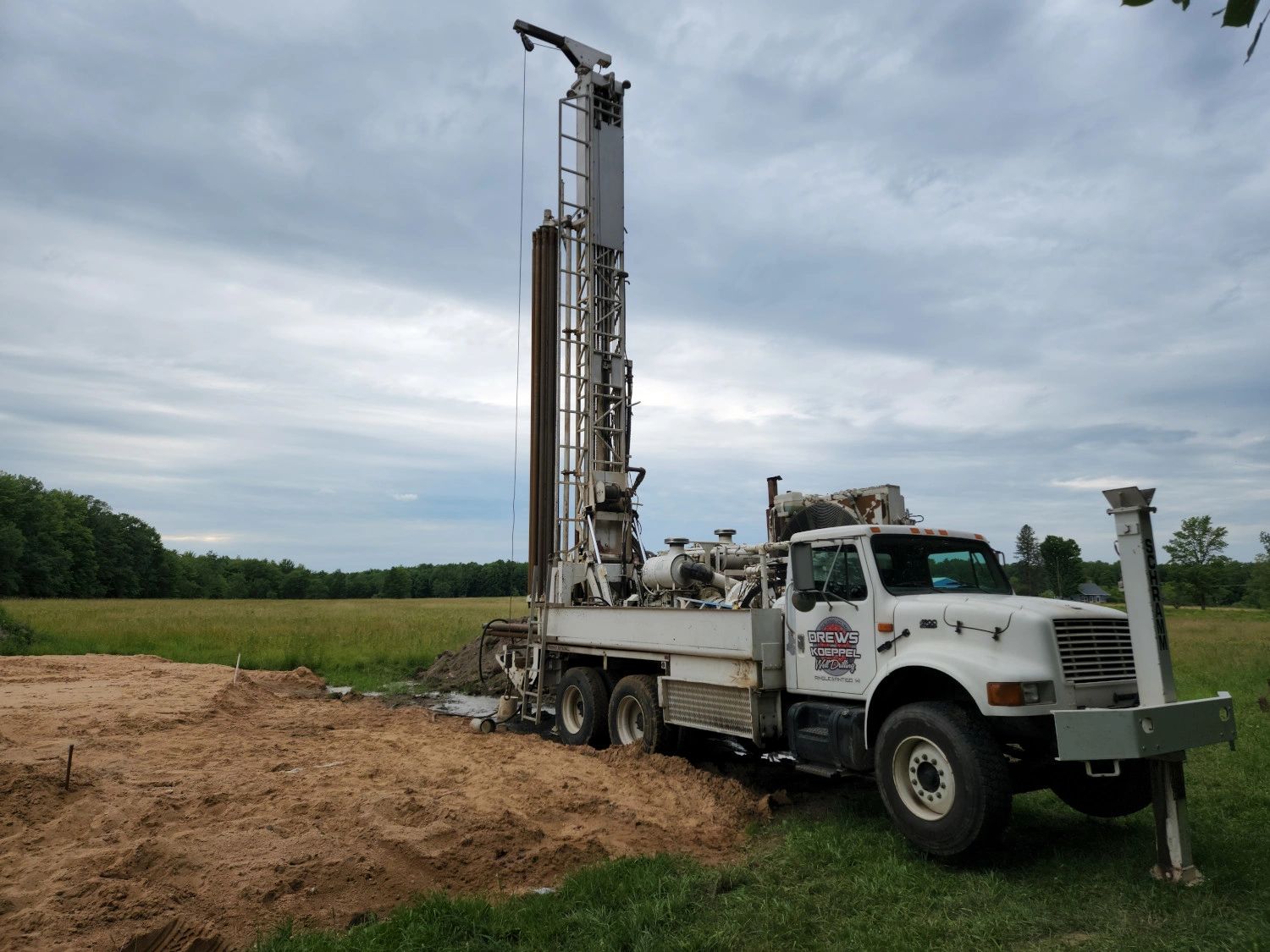
Amherst area wells typically penetrate a surficial soil or clay, transitioning into thick sequences of sand or sand & gravel, with occasional interbedded clay layers, to depths of about 80–105 feet. Most residential production derives from medium to coarse sand or sand & gravel aquifers.
Showing contractors within 60 miles of Amherst. 64 results found.
Check depths and logs of existing wells in the area before you drill.
Open well map →Costs, permits, maintenance tips for private wells in Wisconsin.
Open guide →Not in Amherst? Search well drilling near me in the national directory, or find well service and repair near me and well pump service near me for work on an existing well.
A geological estimate for the Amherst area.
Based on the reviewed well logs for the Amherst region and adjacent townships, the general stratigraphy consists of a thin layer of topsoil or clay at the surface, followed by a thick, largely unconsolidated sand or sand & gravel sequence. Occasional lenses of fine sand, silt, or clay may be present, especially below 40–60 feet. The main aquifer for domestic and irrigation use is a medium-coarse sand or sand & gravel layer, typically found from 30–100 feet. Residential wells supplying ~10–25 GPM generally complete in this zone at 80–105 feet. Casing is typically set to about 60–100 feet, terminating above or within the primary aquifer, with screen material across the coarser zone. High-capacity irrigation wells are set deeper but access the same dominant aquifer system.
| Depth (Feet) | Formation Type | Description | Characteristics |
|---|---|---|---|
| 0 – 2 ft | Topsoil/Clay | Topsoil or silty clay, brown/tan | Color: Brown/Tan Hardness: Soft |
| 2 – 20 ft | Sand & Gravel, occasional cobbles/boulders | Coarse-grained sand and gravel, some cobbles, occasional boulders | Color: Mixed, Tan/Gray Hardness: Firm to loose |
| 20 – 60 ft | Sand (Fine to Medium), possible clay/silt interbeds | Tan to gray fine-to-medium sand, with thin clayey/silty interbeds possible; locally more gravel | Color: Tan/Gray Hardness: Loose to moderately firm |
| 60 – 85 ft | Medium to Coarse Sand and Gravel (Main Aquifer) | Medium to coarse sand, trace to significant gravel. Primary water-yielding zone for residential/irrigation supply. | Color: Tan/Brown/Gray Hardness: Loose |
| 85 – 100 ft | Sand, locally clayey or silty intervals | Mixed sand, with possible zones of gray or tan clayey sand near base. May locally include clay/silt lenses. | Color: Tan/Gray Hardness: Moderate |
| 100 – 105 ft | Clay/Silt or Coarse Sand (base, if present) | Thin, gray to brown clay/silt or coarse sand, rarely grading to bedrock (data sparse below 100 ft). | Color: Gray/Brown Hardness: Firm |